[2025 Edition] Common Troubles Arising from Weeds at Solar Power Plants: Necessity, Methods, and Precautions
![[2025 Edition] Common Troubles Arising from Weeds at Solar Power Plants: Necessity, Methods, and Precautions](https://so.shizenenergy.net/cms/wp-content/uploads/2025/03/AdobeStock_533430647-1-scaled.jpeg)
Note: This article is based on the content published on June 12, 2024.
Allowing weeds and vegetation to grow unchecked at a solar power plant, can lead to decreased power generation efficiency and conflicts with neighboring residents. It is important to conduct weeding carefully to prevent injuries and disputes, whether by hiring specialized contractors or using tools such as mowers or herbicides.
In this article, we will explain the necessity of weeding at solar power plants and detail effective methods for managing weeds. We will clarify the reasons for weed removal and outline proper procedures, so please read until the end.
What is Weeding at Solar Power Plants?
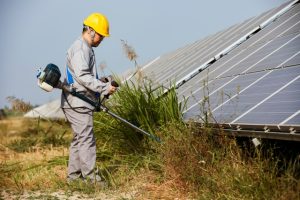
Weeding at solar power plants involves removing weeds or preventing them from growing by using methods such as mowers, herbicides, and weed barrier sheets. This is essential work for maximizing the efficiency of power generation and avoiding conflicts with neighbors.
First, let’s explore the necessity of weeding and actual examples of trouble caused by neglect.
The Importance of Weeding
When weeds grow in a solar power plant, they may cause the following adverse effects:
- Sunlight is blocked by weeds, reducing power generation efficiency.
- Vines entangle fences, reducing airflow and causing fences to lean or deform.
- Vines and grass intrude inside inverters and combiner boxes, leading to breakdowns and malfunctions.
- Weeds within the site encroach onto roads or neighboring farmland, causing disputes.
- Electrical arcs near weeds may trigger fires by igniting the vegetation.
- Leaving the site unmaintained with overgrown weeds increases the risk of damage by animals or theft.
As shown, unchecked weed growth can pose various risks to safety, efficiency, and community relations. Maintaining a weed-free environment is vital for safe and efficient operation.
Examples of Trouble Caused by Lack of Weeding
The following table summarizes “Examples regarding weed overgrowth at solar power plants” published by the Ministry of Internal Affairs and Communications.
Case 1: Insufficient weeding at a high voltage solar power plant
| Details | Local residents consulted the city, stating that weeding within the site was insufficient and dry grass remained, creating a fear that if a fire occurred, it would spread to neighboring houses. |
| Actions Taken | The city conducted an on-site inspection and requested the power generation operator to weed the area, but no improvement was seen. It was only after reporting to the Agency for Natural Resources and Energy under the Ministry of Economy, Trade and Industry, that the completion of weed removal was executed and confirmed. |
Source: 総務省 第4事例集「太陽光発電設備の雑草等繁茂に関する事例」
Case 2: A power plant (output unknown) was not weeded and lacked the operator’s contact details display
| Details | Local residents consulted the city, expressing a desire for weed removal due to heavy overgrowth. However, the residents were unable to contact the operator because no identification signage was posted. |
| Actions Taken | The city identified the power generation operator using the Certified Equipment Information database and requested that they take action. As a result, signage has since been installed, and proper weeding is now being maintained. |
Source: 総務省 第4事例集「太陽光発電設備の雑草等繁茂に関する事例」
These cases demonstrate that failing to manage weeds can lead to neighbor disputes, reduced efficiency, and safety hazards, ultimately decreasing revenue and increasing maintenance costs.
For example, if solar panels are installed vertically, they are particularly susceptible to shading from weeds. Shadows on one part can hinder power generation even in areas not covered by weeds, leading to overall efficiency loss. Weeding is essential for maximizing the operational efficiency of your solar power plants.
Recently, there is a growing demand for removing vines from fences to prevent structural collapse. Additionally, early vegetation control and frequent weeding is critical; once trees or bamboo take root, removing them requires significant labor.
Furthermore, failure to manage weeds can obstruct on-site response and root cause analysis during emergencies, leading to significant delays. Regular weeding is therefore essential from the perspective of safety management of solar power plants.
Methods for Weeding Solar Power Plants
There are three main methods for weeding solar power plants:
Mowers
Herbicides
Weed barrier sheets
We will explain the details of each.
Method 1: Mowers
This is a method of cutting weeds using a mower. It is one of the most common and intuitive approaches to weed control.
<
| Advantages | Disadvantages |
|
|
While mowing is a relatively accessible DIY method, it carries risks such as severing cables or damaging racks and solar panels. Even when outsourcing to a contractor, it is essential to verify their track record and expertise to minimize these operational risks.
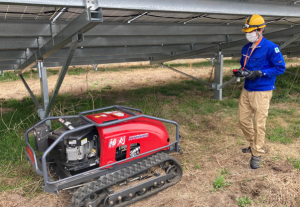
Furthermore, robotic mowers have recently emerged as a viable solution. Since manual mowing of vast sites, such as extra-high-voltage power plants, is extremely time-consuming, Shizen Operations utilizes robotic mowers to improve efficiency.
Method 2: Herbicides
This method involves applying herbicides to suppress weed growth. Herbicides are categorized into registered and unregistered agrochemicals; we strongly recommend using those registered with the Ministry of Agriculture, Forestry and Fisheries.
| Advantages | Disadvantages |
|
|
Simply spraying herbicides may not yield the desired results. It is important to evaluate their use after researching the specific types and optimal application methods.
Method 3: Weed Barrier Sheets
This method prevents weed growth by using specialized sheets to block sunlight.
| Advantages | Disadvantages |
|
|
Pre-installation clearing of existing vegetation is essential when laying weed barrier sheets. To ensure maximum effectiveness, the ground should be thoroughly leveled, and the sheets must be laid flat without wrinkles to prevent any gaps where weeds could take root.
Weeding Frequency and Timing at Solar Power Plants
Weeding is generally recommended two to three times per year, depending on site conditions. Unlike botanical gardens and residential gardening, the frequency must be balanced with profitability.
Excessive outsourcing can lead to unnecessary expenses and reduced overall revenue. It is crucial to identify the minimum frequency required to prevent weed-related issues while minimizing costs. We recommend determining the ideal schedule for your specific site, taking into account factors such as rack height.
The optimal timing usually includes spring (May to June) and late summer (August to September).
Precautions When Weeding Solar Power Plants
In implementing weeding at solar power plants, operators must consider the impact on the surrounding land and communities. Key points to note include:
- Ensure that chemicals such as herbicides do not drift to the surroundings.
- Use chemicals such as herbicides that do not contain dioxins or specified substances defined by the Soil Contamination Countermeasures Act.
- Brief local residents before using pesticides.
- Workers must be careful not to cut cables when weeding.
Safety management is vital not only for your own solar power plant but also for the surrounding land and community. To prevent injuries and trouble, it is highly recommended to hire contractors with specialized knowledge.
Outsourcing Weeding to a Professional Contractor
Requesting weeding from a professional contractor is another effective option. By hiring professionals, you can ensure the area around your facility is cleared while preventing injuries and operational issues.
However, pricing and services vary by contractor. Pricing trends differ across the industry, with some companies setting rates based on the site’s scale or panel capacity. We recommend conducting a review of a contractor’s service area and track record to ensure they are trustworthy before making a decision.
Operate Your Solar Power Plant Safely Through Regular Weeding
In this article, we explained weeding at solar power plants in detail. To summarize:
- Neglecting weeding may lead to a decrease in power generation efficiency and facility breakdowns or malfunctions.
- Overgrown weeds may cause issues not only within the facility but also with nearby residents.
- It is critical to implement weeding work safely while preventing injuries and trouble.
Methods for weeding work at solar power plants include using mowers, herbicides, and weed barrier sheets. However,we recommend requesting a contractor with a track record and specialized knowledge to avoid the risk of cutting wiring or getting injured.
Proper weeding around your facility is key to the safe and successful operation of your solar power plant.