O&M for grid-scale storage batteries: Necessity, Five Core Functions, and Key Points for Implementation and Outsourcing
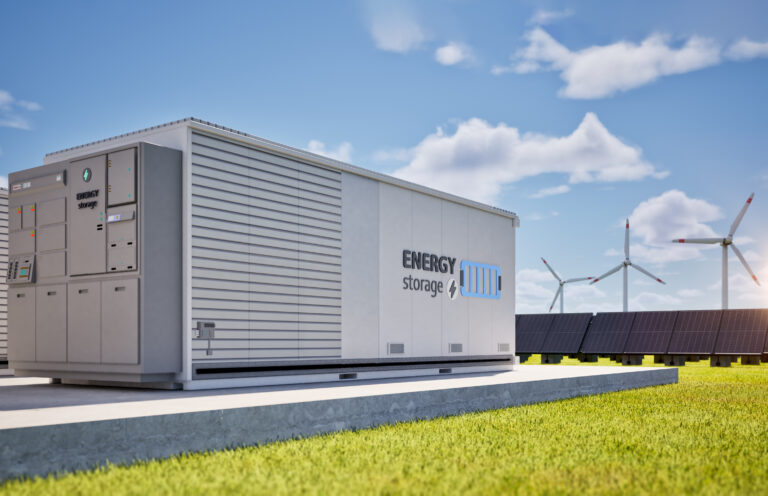
As renewable energy adoption grows, grid-scale storage batteries are becoming crucial for supporting a stable power supply. These large-scale facilities require more than simple installation; they must be operated safely and efficiently over the long term. The key to achieving this is Operation and Maintenance (O&M).
This article outlines the necessity and core functions of O&M, highlights key points for implementation and outsourcing, and provides insights to help reduce business risk and secure profitability.
Why O&M Is Essential for Grid-Scale Battery Storage
The need for O&M for grid-scale storage batteries stems from three main factors:
1-1. Increasing Operational Complexity with the Spread of Renewable Energy
The installed capacity of renewable energy is increasing every year. Output fluctuations from solar power and wind power significantly impact the stability of the power grid. Grid-scale storage batteries play a crucial role in securing this stabilization.
However, as battery facilities have grown to tens of megawatts, they are now managed not merely as equipment but as full-scale power plants. Consequently, “long-term, safe, and stable operation”—not just installation—has become vital for business success.
Accordingly, a framework for continuous O&M has become essential. Through proper O&M, operators can reduce accident risks, extend the lifespan of their facilities, and directly enhance investment recovery and revenue stability.
1-2. Legal and Regulatory Requirements for Operational Management
Amendments to Japan’s Electricity Business Act have defined grid-scale battery systems as part of the “power generation business.” As a result, operators are required to:
- Submit notification of basic business information
- Maintain ongoing compliance with technical standards
- Conduct pre-operational self-inspection and submit reports to the Ministry of Economy, Trade and Industry
These requirements are similar to those imposed on solar power plants, and operators must maintain continuous operations in compliance with these laws. Failure to comply may result in legal liability in the event of an accident, administrative actions, or even operational suspension. Therefore, ensuring full compliance through systematic O&M is essential.
1-3. Reducing Business Risk for Power Plant Owners
In recent years, an increasing number of solar power plant owners are entering the grid-scale storage battery business as a new investment opportunity. However, batteries require more advanced technical expertise and management systems, particularly for control operations and market interaction.
For example, delays in recovery from downtime lead to lost generation opportunities and significant revenue reduction. Furthermore, discrepancies between planned and actual output can incur imbalance charges from the electricity market. Stabilizing operations through systematic O&M is essential to mitigate these business risks.
An effective O&M structure delivers the following benefits:
- Minimizes downtime from equipment failure.
- Prevents unplanned outages, maximizing generation opportunities.
- Improves the certainty of medium- and long-term investment recovery.
Ultimately, this leads to stable revenue for the owner.
The “Five Core Functions” of Grid-Scale Storage Battery O&M
O&M — short for “Operations and Maintenance” — is essential for the stable operation of grid-scale storage batteries. Here, we summarize five key functions typically included in O&M activities.
Please note that the following is an overview; specific methods and the scope of services will vary by O&M provider.
2-1. Ensuring Safety (Fire, Electrical, and Environmental Prevention)
Batteries handle high voltage and high currents, carrying inherent risks of fire and electric shock. Lithium-ion batteries, in particular, are known for the risk of thermal runaway. Any fire could cause significant damage to the surrounding environment.
O&M ensures safety through inspection of fire suppression equipment and monitoring sensors, and maintenance that complies with electrical safety standards, preventing accidents before they occur.
2-2. Maintaining Performance (Degradation, Operation, and Temperature Management)
Batteries gradually degrade as they repeatedly charge and discharge. Improper operational management, such as overcharging or over-discharging, accelerates this degradation, making proper control essential.
Imbalances between cells and poor temperature management can aggravate performance decline. O&M services monitor degradation levels and manage temperatures appropriately to maintain long-term performance and maximize the battery’s expected lifespan.
2-3. Operational Monitoring (Remote Monitoring and Alerts)
Because storage batteries operate 24 hours a day, they require constant status monitoring. The foundation of O&M is a remote monitoring system that detects anomalies or signs of failure and issues immediate alerts. This system enables fault identification and initial response before dispatching personnel, significantly shortening recovery times.
2-4. Periodic Inspection and Preventive Maintenance (Patrols, Annual Inspections, Parts Replacement)
Regular patrols and annual inspections are fundamental for maintaining the reliability of battery systems. Typical procedures include checking for loose wiring and connections, measuring insulation resistance, and verifying the operation of cooling and fire suppression systems. Planned replacement of life-limited parts also prevents sudden failures.
2-5. Fault Response and Recovery (Dispatch, Recovery Procedures, Reporting)
In the event of a problem, a swift on-site response and the execution of recovery procedures are critical. Since batteries interact with grid operations and electricity markets, extended downtime directly translates into financial losses such as imbalance charges.
O&M teams must establish an emergency dispatch system, maintain recovery manuals, and report the cause of the incident and response measures to the owner. This framework minimizes business risk.
Points to Consider When Implementing Grid-Scale Storage Battery O&M

This section explains five key points to consider when implementing O&M for grid-scale storage batteries.
Even with a clear understanding of O&M’s importance, practical implementation involves significant hurdles, including specialized knowledge, operational resources (labor and time), and proven know-how. Outsourcing to a specialized provider is often the most realistic option.
3-1. The High Barrier to In-House O&M Execution
Grid-scale storage batteries require multifaceted knowledge and experience covering chemical degradation, cell behavior, cooling system operations, and Fire Service Act regulations. Attempting in-house operation without adequate manuals and personnel increases the risk of unexpected failures.
3-2. Compliance with the Electricity Business Act
Following regulatory revisions in 2022, battery plants are legally classified as part of the “power generation business.” This mandates procedures such as submitting basic information before starting operations, maintaining technical standards compliance, and filing pre-operational self-inspections. Failure to comply constitutes a legal violation and could, in the worst case, lead to operational suspension.
3-3. Hazardous Materials Controls Under the Fire Service Act
The electrolyte in lithium-ion batteries is classified as a hazardous material under the Fire Service Act. Therefore, grid-scale storage batteries exceeding a certain size require consultation with and applications to the local fire department, starting from the installation phase. Fire suppression methods are specialized, necessitating operational management by trained personnel with sufficient knowledge. The Fire and Disaster Management Agency continues to review safety measures through its “Study Group on Hazardous Materials Regulations for Lithium-Ion Batteries.”
3-4. 24/7 Monitoring and Response System
Battery systems charge and discharge day and night, operating continuously. Unlike solar plants, which primarily generate electricity during the day, a monitoring system limited to daytime hours is insufficient. A structure capable of responding 24 hours a day, 365 days a year is essential.
If a failure occurs at night or on a holiday, the inability to detect and respond immediately leads to extended downtime, financial losses, and safety risks. Specialized providers typically establish remote monitoring centers that combine alert responses with on-site dispatch.
3-5. Coordination with Aggregators
Since batteries play a direct role in grid balancing, equipment downtime can cause discrepancies in planned versus actual output, triggering imbalance charges. Therefore, close coordination with aggregators is essential.
If the O&M provider does not understand market rules and operational practices, delayed responses can cause significant financial losses for the owner. Collaboration between the O&M provider and the aggregator is crucial for mitigating risk.
Key Points When Selecting a Grid-Scale Storage Battery O&M Provider
As detailed above, O&M for grid-scale storage batteries requires a diverse range of skills and systems, including advanced technical knowledge, continuous monitoring, and regulatory compliance capabilities.
Managing this entirely in-house is often impractical, making it common to outsource to specialized providers. However, selecting the wrong partner can lead to inadequate failure response and magnified market losses. Focus on the following four criteria when choosing a provider.
4-1. Support System from Specialized Personnel
Grid-scale storage batteries require supervision by chief electrical engineers and technicians who understand the chemical properties of the batteries. When selecting a provider, it is important to verify that they employ specialized personnel familiar with the Electricity Business Act and Fire Service Act, rather than relying solely on general equipment management staff. Their ability to make critical judgments during anomalies and manage discussions with authorities is a key indicator of reliability.
4-2. Continuous Monitoring and Emergency Response Capability
Some O&M providers only offer periodic inspections, relying on external services for continuous monitoring and emergency response. However, for battery storage, it’s crucial to choose a provider with an in-house team capable of 24/7 remote monitoring and immediate on-site dispatch. A provider with its own monitoring center that handles everything from detecting incidents to recovery offers significantly greater assurance.
4-3. Electricity Market Response Capability During Failures
Batteries are closely linked to market trading, so generation plan discrepancies during a failure lead to imbalance charges. The provider’s ability to coordinate with aggregators and respond appropriately to the market significantly impacts revenue stability. A provider familiar with market systems and operational rules, capable of making rapid adjustments during a failure, can minimize financial risk.
4-4. Operational Know-How Based on a Track Record
O&M for grid-scale storage batteries is a relatively new field, and provider experience varies significantly. A proven track record—how many projects they have managed and how they have responded to past failures—is essential for judging a provider’s capability. A provider with extensive O&M experience in both battery storage and other assets like solar power can offer comprehensive operational support for an entire renewable energy portfolio.
Conclusion
Grid-scale storage batteries are indispensable infrastructure, growing in importance with the expansion of renewable energy. However, their installation and operation introduce new risks for power plant owners. Without proper O&M, profitability and safety can be severely compromised.
This article highlighted the following points:
- O&M has become essential due to renewable energy expansion and regulatory enforcement.
- The five core functions of O&M are ensuring safety, maintaining performance, monitoring operations, conducting periodic inspections, and responding to failures.
- Implementation requires regulatory compliance, 24-hour monitoring, and coordination with aggregators.
- When selecting a provider, it is crucial to verify their specialized personnel, 24/7 monitoring systems, market response capabilities, and track record.
Given these factors, managing everything internally is highly challenging, making a partnership with a trusted O&M provider vital.
Shizen Operations Inc. specializes in O&M for renewable energy power plants, including grid-scale storage batteries. We offer solutions that support an owner’s stable operations, providing periodic inspections, monitoring, a 24/7 monitoring system, and market response support during failures. If you face challenges in operating your battery storage business, please feel free to contact us for consultation.
Sources:
蓄電所に対する保安規制のあり方について|経済産業省
リチウムイオン蓄電池に係る危険物規制に関する検討会|総務省消防庁